This article contains affiliate links. As an Amazon Associate, I earn from qualifying purchases.
Colored pencils vary considerably even within the same brand. Pigment load, filler content, binder formula, opacity, value, and best handling practices can change from color to color.
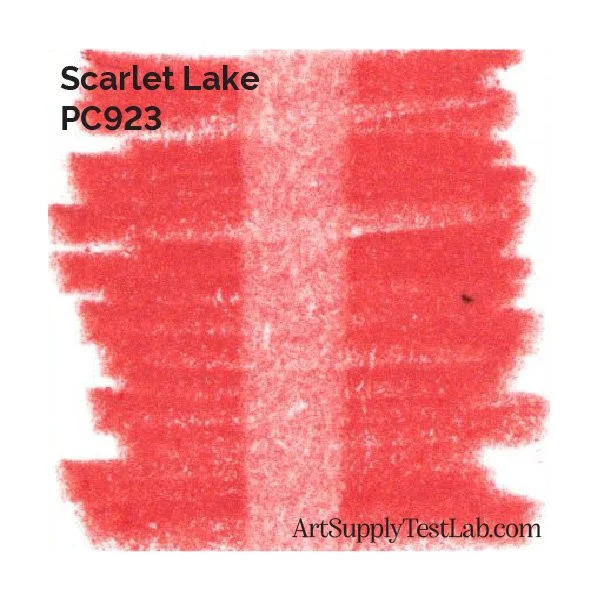
Let’s test one of Prismacolor’s warm reds:


The original scarlet…
Prismacolor started making pencils in 1936 and Scarlet Lake 923 was part of the earliest set.
Today, Prismacolor makes several similar value reds with only subtle differences (see below), Scarlet Lake is their bright warm red.
Scarlet Lake also feels like the last real red. As we move warmer, the reds feel more and more orange.
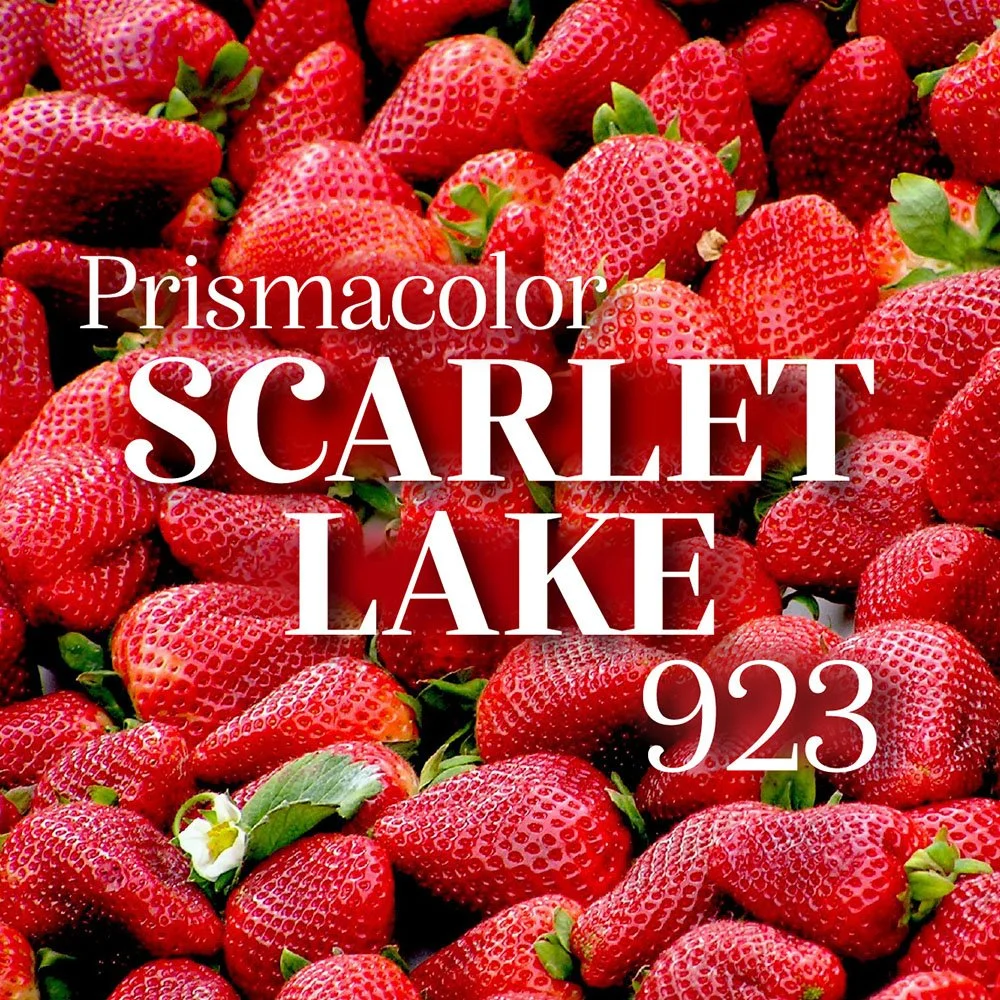
This classic scarlet is ideal for botanical and food illustration, plus general sketching.
Let’s look closer at Prismacolor’s Scarlet Lake, PC923.
Prismacolor Premier: Learn about the pencil line, sets, and how Prismacolor colors compare.
The Color: Prismacolor Scarlet Lake 923
Name: Scarlet traditionally refers to warmer, spicy reds which lean more towards orange than magenta. The word “Lake” when added to a color name indicates that the color is transparent. Scarlet Lake basically means “Transparent Scarlet”.
Temperature: Scarlet Lake is a warm red. It has a slight orange flavor to it but it’s still solidly red. Nobody would mistake this pencil for dark orange.
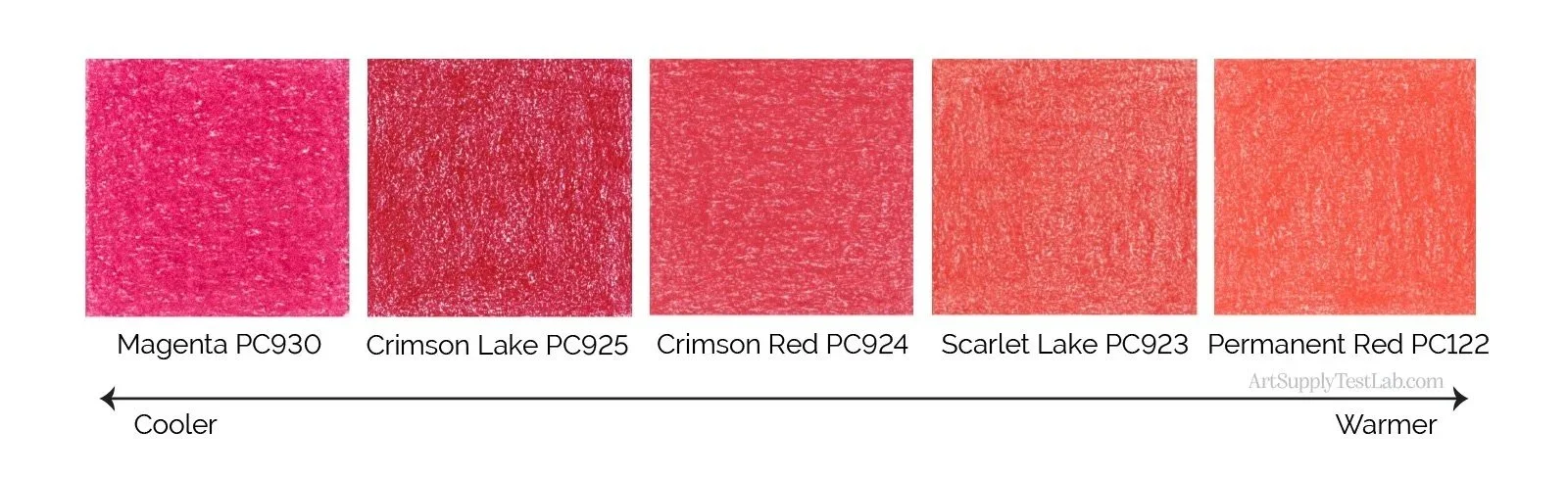
Resemblance: While many companies do make Scarlet Lake paint, Prismacolor’s Scarlet Lake more closely resembles Scarlet Pyrrol paints. If you’re looking for traditional “candy apple red”, Scarlet Lake is perfect. And if I’m honest, the samples in the article here don’t do this color justice.
Neutralization: Scarlet Lake is clean and bright, a very saturated color.
Value: Scarlet Lake measures 60% gray in value.
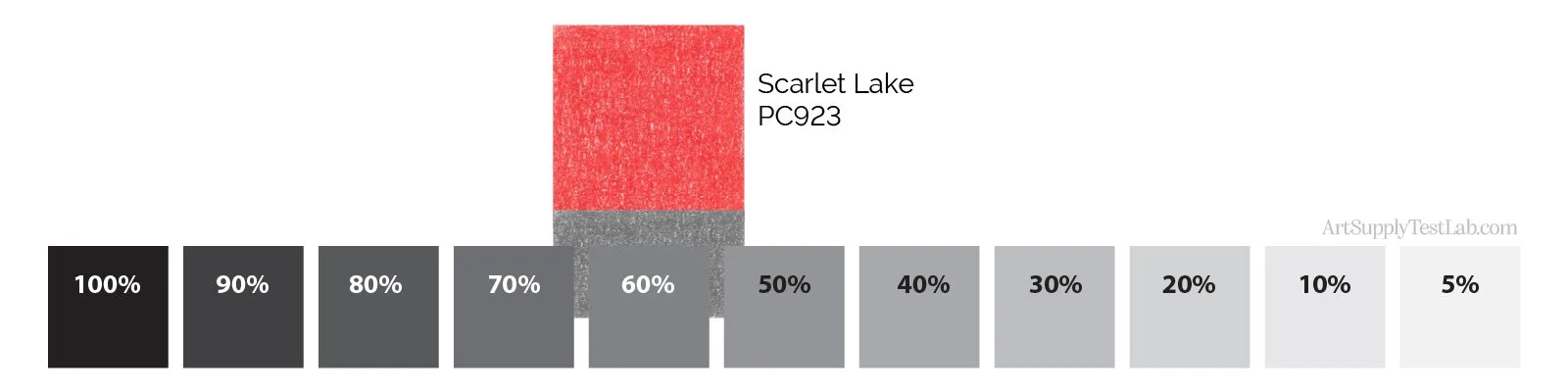
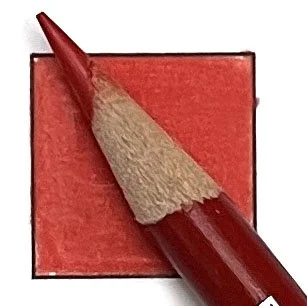
Indicator Accuracy: The paint on Prismacolor Scarlet Lake is slightly darker than the fully burnished color but it’s near enough that you can easily tell what you’ll get when you use this color.
Remember, back in the 1930’s when the early colors were developed, indicator accuracy wasn’t a priority because there were only a few red pencils in the entire world.
Availability: All Prismacolor Premier colors are sold open stock but not every retailer carries the entire line. Check with your retailer before travelling.
As for sets, Scarlet Lake is not one of the more popular reds and is therefore only included in the larger sets of 72, 132, and 150.
Buy Prismacolor Premier Scarlet Lake PC923
The smallest Prismacolor set containing Scarlet Lake is the standard 72-count set.
These are affiliate links. Purchases made through them help fund the Lab’s independent testing at no additional cost to you. As an Amazon Associate, I earn from qualifying purchases.
Test Results: Prismacolor Scarlet Lake 923
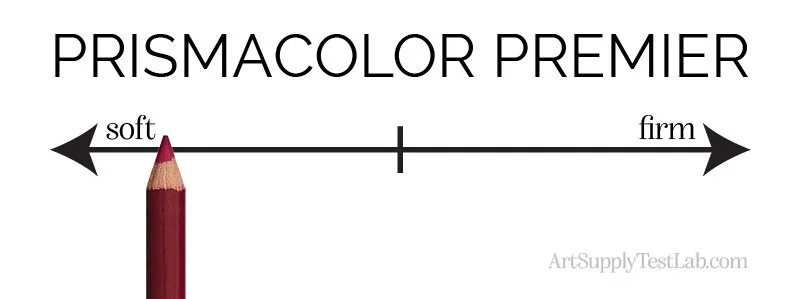
Core Firmness: Prismacolor Premier pencils are well known as one of the softest artist grade pencils on the market today. Crimson Lake has the standard smooth glide across the paper.
Oil or Wax Base: Read more about why this is nonsense here.
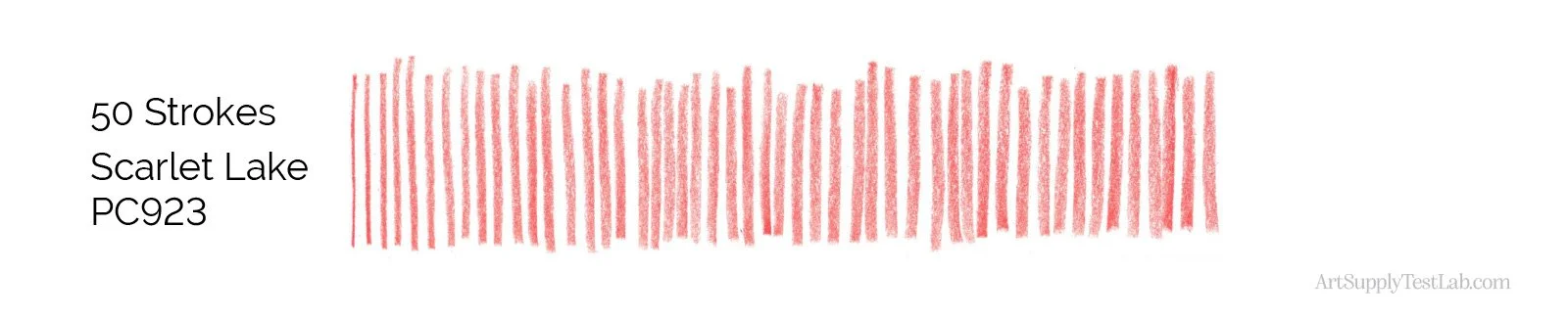
Point Retention: Like all soft colored pencils, Scarlet Red does not hold a point well. It feels like one of the softer Prismacolors but the pencil kept the point longer than I expected.
Starting with a freshly sharpened pencil, I lost the fine point about 1/3 of the way through and the strokes got very wide even before I got to 50 strokes. This pencil is not recommended for detail unless you sharpen frequently.
All tests are conducted on Strathmore Bristol 300 Smooth for consistency.
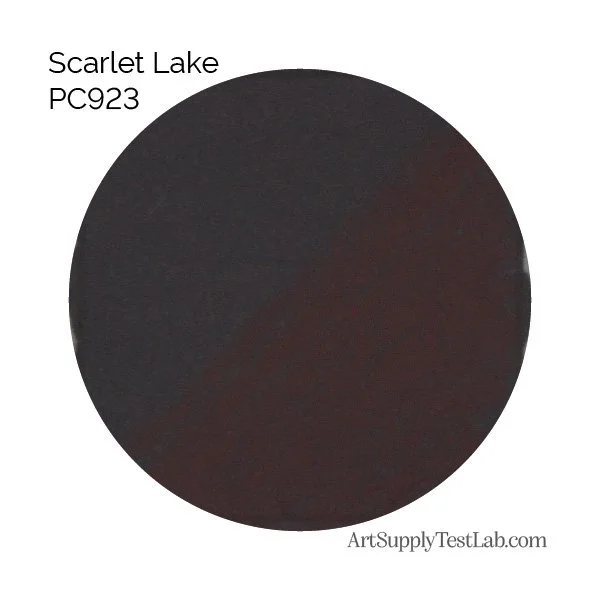
Opacity: Color opacity is one of the most important features of a colored pencil. Read why here.
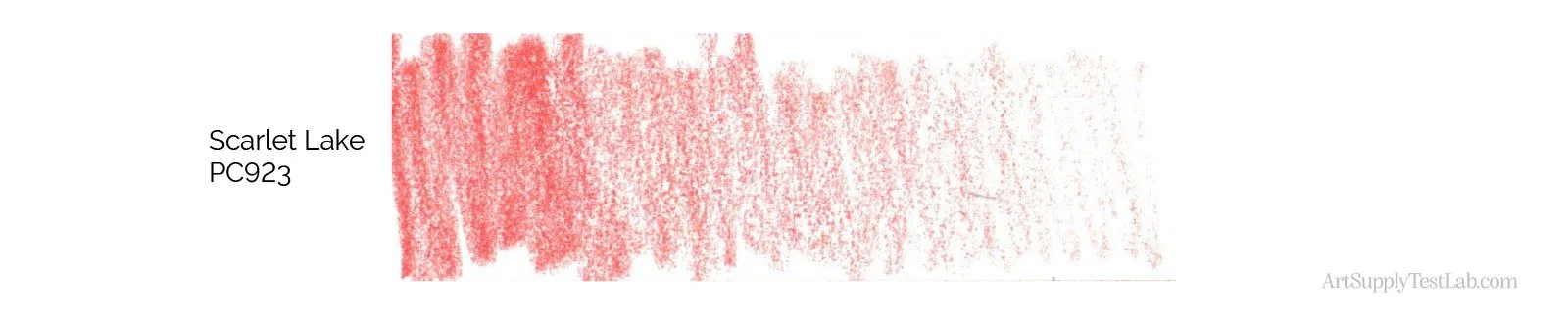
The name Scarlet Lake indicates that this is a transparent pencil and it lives up to the name. Scarlet Lake is an extremely translucent, almost transparent pencil.
When colored over a black swatch, to the naked eye, this pencil is almost invisible and yet there’s a slight glow to the swatch. Even when tilting the paper this color didn’t catch very much light. That’s an actual swatch photo, the color is there but it’s hard to see, even in person.
Glazing: The transparency of Scarlet Lake makes it perfect for glazing. In my classes at ColorWonk.com, we call these “magic pencils” because they’re chameleon colors, ideal for adding glazing subtle color without loudly advertising which color you used. Scarlet Lake isn’t my favorite glazing color and after testing, now I think I’ve been picking up that slight glow to the color. Any glow would make a color bad for shading.
Masking: Translucent pencils like Scarlet Lake cannot be used to mask or block previous layers of pencil. Even if you press hard, this pencil is incapable of blocking prior layers.
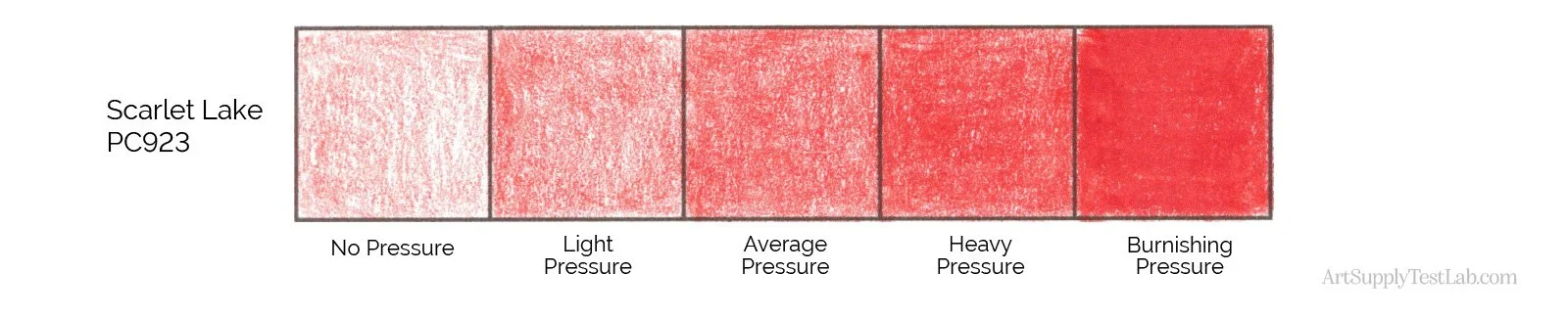
Pigmentation: While I can’t measure true pigment load without laboratory equipment, Scarlet Lake behaves like a moderately-low pigmented pencil.
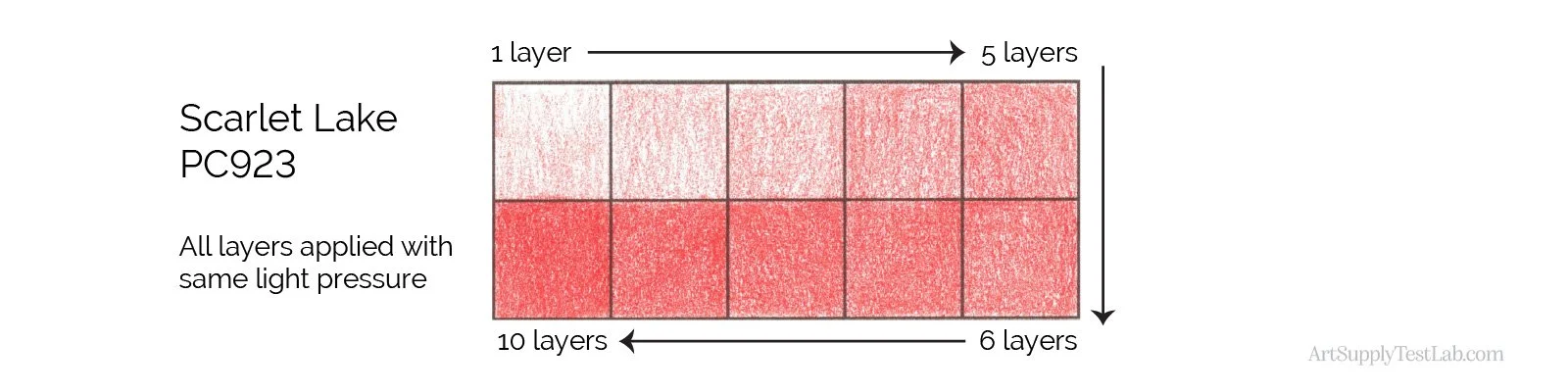
The color builds with changes in hand-pressure (shown above) but at heavy and burnishing pressures, it feels like I should be getting more color per stroke. With repeated layers of light consistent pressure (below), the color increases far more slowly. This doesn’t feel like a student grade pencil or cheap, it just doesn’t feel as lush and colorful as standard Prismacolor Premiers.
Note the difference between the Burnishing level color above and the 10th layer of color below. Crimson Lake didn’t reach full value and potency at 10 light layers of pencil, a sign of its transparency.
Surface Finish: Like most Prismacolor Premier pencils, Scarlet Lake has a satin/waxy sheen with an almost moist-looking color appearance. This pencil has a very pretty luminous quality to it and like most translucent Prismacolors, the color has depth, like looking through thick red glass.
Glide: Like most Prismacolor Premier pencils Crimson Lake has a smooth glide with zero sand, grit, or drag.
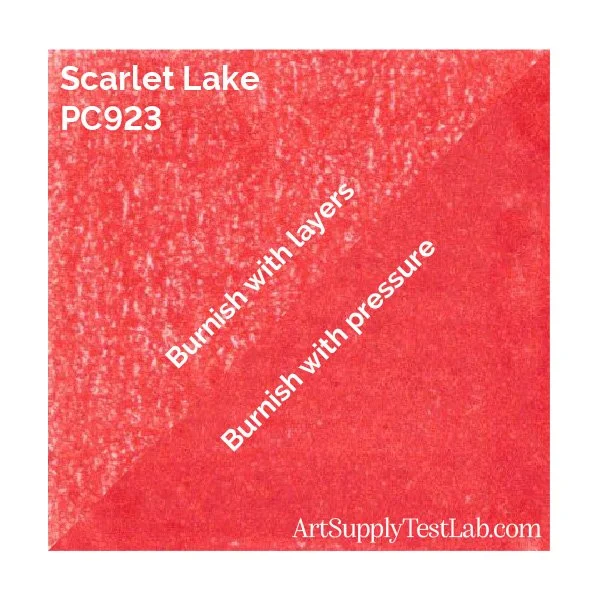
Laydown Consistency: When applied with light to moderate pressure in even layers, Crimson Lake’s laydown is consistent with no streaks of binder or blotchy pigment.
Unfortunately as we increase in pressure, the transparency and lower pigment load results in slightly blotchy color. It’s not terrible, it’s just not as smooth as other Prismacolor reds.
I don’t typically recommend burnishing with a heavy hand. I prefer to build to the burnishing stage gradually in light layers. But if you insist, Scarlet Lake is a not a good candidate for single-coat burnishing. It didn’t pilling or shed but the color wasn’t perfectly smooth and even.
Paper Adhesion: Scarlet Lake is a soft pencil. There were no issues getting it to stick to Smooth Bristol. I wouldn’t say it lays down a ton of color per stroke but sticking to the paper was not an issue.
In fact, I specifically recommend Prismacolor Premier pencils when working on ultra-smooth or polished marker papers where adhesion is usually a problem. Prismacolor often sticks when nothing else will.
Layering Adhesion: I had no issues getting Scarlet Lake to stick to itself. In the sample above, the area burnished with light layers (top left half) shows 12 moderate pressure layers and I saw no trenching or pilling in the process. There was also very little shedding with heavy pressure, it’s a soft pencil so they’re not going to withstand a lot of pressure without giving way. Excellent adhesion is typical of Prismacolor Premier.
Erasure: Soft colored pencils are not generally not erasable.
With 10 firm swipes of a non-abrasive polymer eraser over a pressure-burnished swatch, the best I was able to do was lift a small amount of color, one of the worst erasing pencils I’ve tested so far BUT remember that soft colored pencils were not designed to be erasable. Even after firm erasing, you can still see significant pigment embedded in the tooth and the paper is permanently stained.
Shedding: Throughout the entire testing process, I saw very little shedding or dust from Crimson Lake.
To avoid grinding the dust into your paper with the side of your hand, I recommend stopping periodically to lightly brush your project clean with a soft hake brush (Amazon) (Blick), a large makeup brush (Amazon), or a natural fiber drafting brush (Amazon) (Blick).
Point & Breakage: I sharpen all my colored pencils to a long point using the X-Acto School Pro (Amazon) (Blick).
Scarlet Lake was tested with this same long point. At no time did I break my lead or snap off the tip, not even when coloring with burnishing level pressures.
Scarlet Lake is a sturdy color which can handle firm pressure but not abuse.
ASTM D6901-06 Rankings:
I - Excellent, 100+ years
II - Very Good, 50-100 years
III - Good, 15-50 years
IV - Poor, 1 year
V - Very Poor, weeks - months
Lightfast Rating: Scarlet Lake 923 scores a II (very good) rating using certified ASTM D6901-06 lightfast testing.
See Prismacolor’s full chart with test results here.
Level II pencils can last 50-100 years before any fading might occur.
This is actually a bit ironic since many paints named Scarlet Lake tends to rank poorly in lightfastness testing but Prismacolor’s version is durable for most uses.
Scarlet Lake in Action:
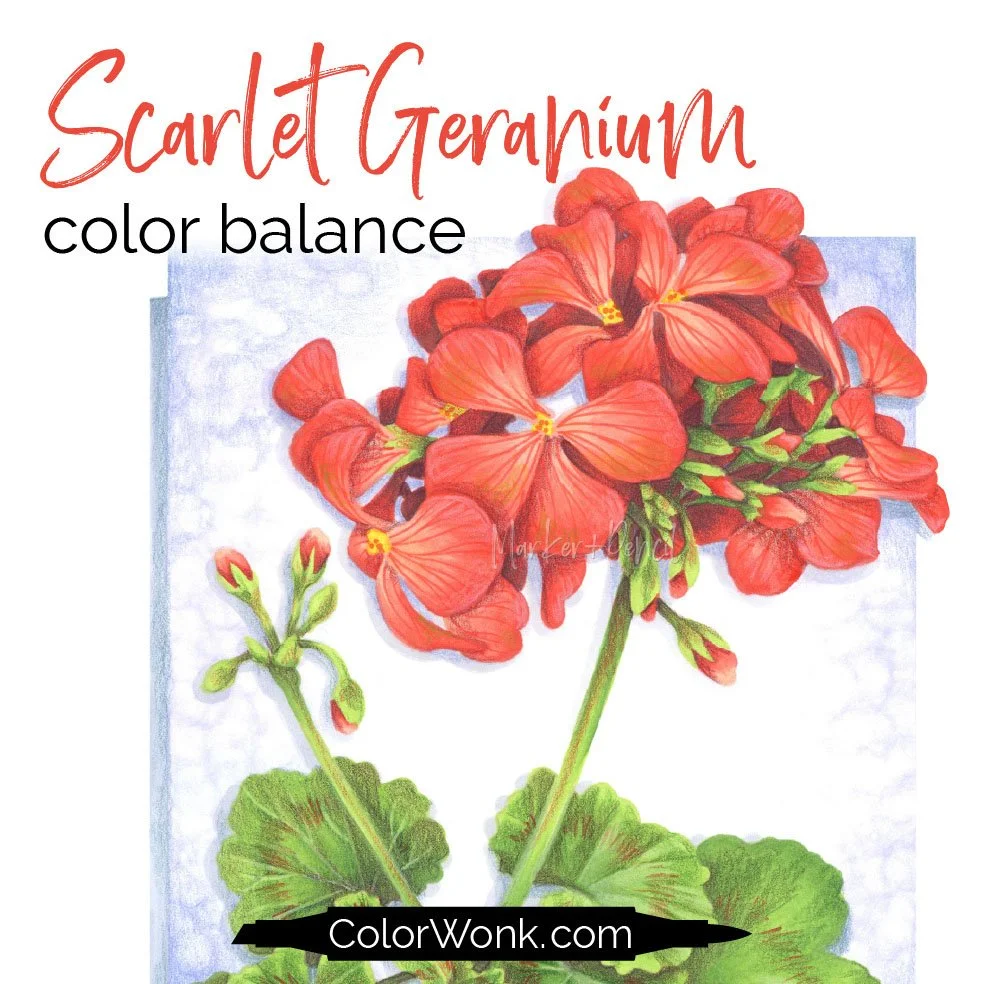
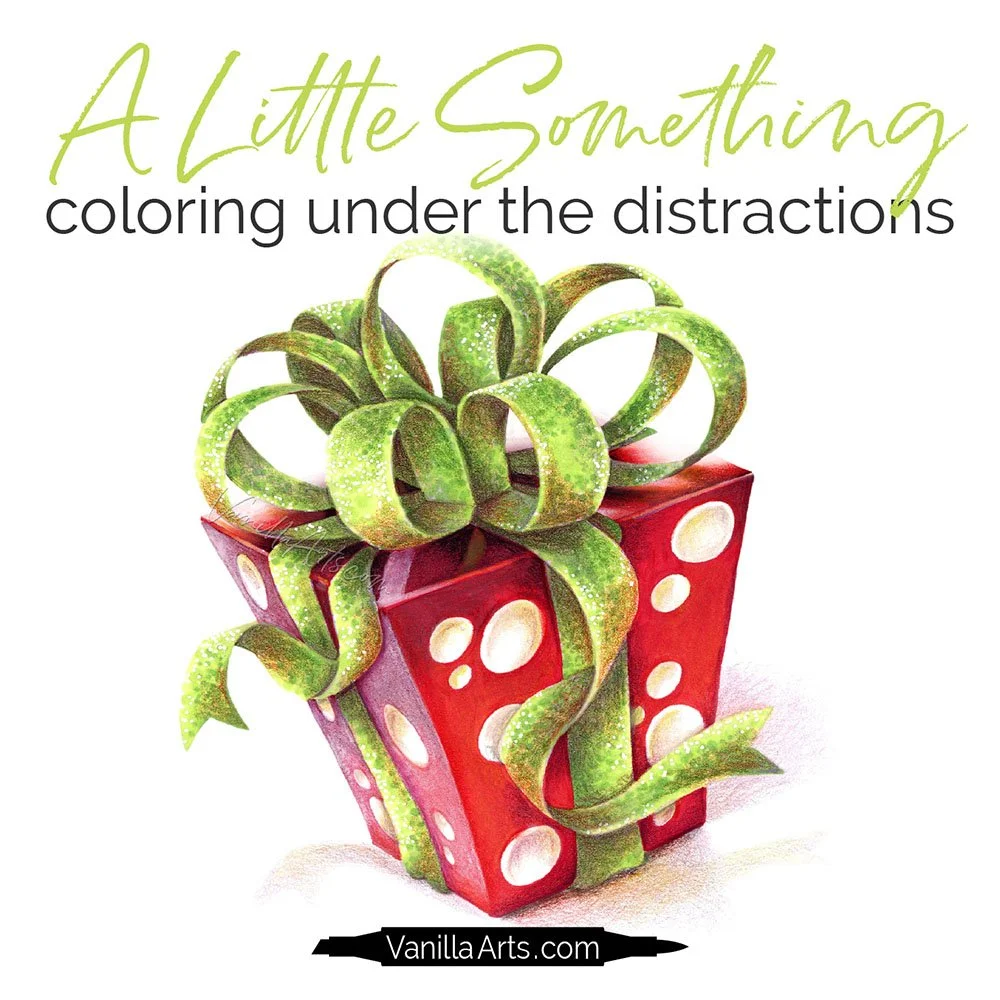
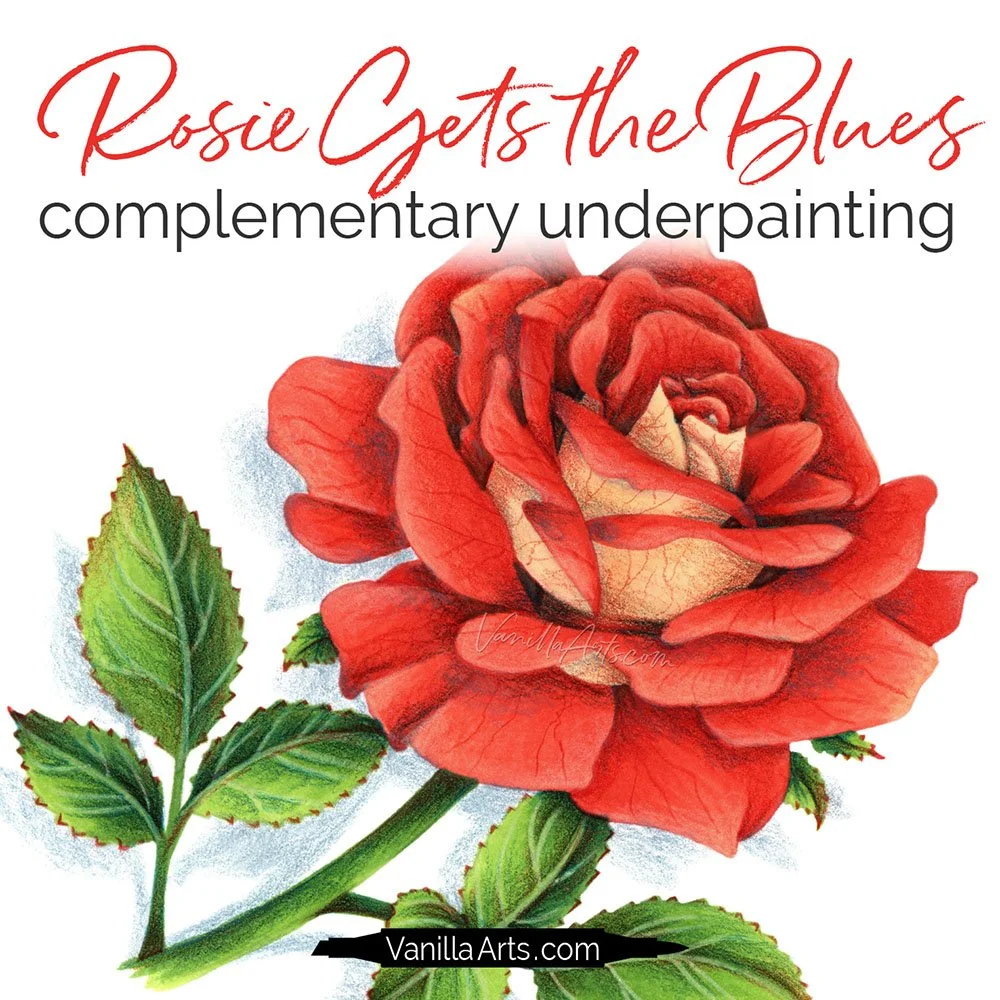
Here’s a taste of how I use Prismacolor Crimson Lake 925. Each lesson project teaches realistic coloring techniques using professional markers and colored pencils.